British Breeds
British Breeds
Baa Ram Ewe
Couldn't load pickup availability
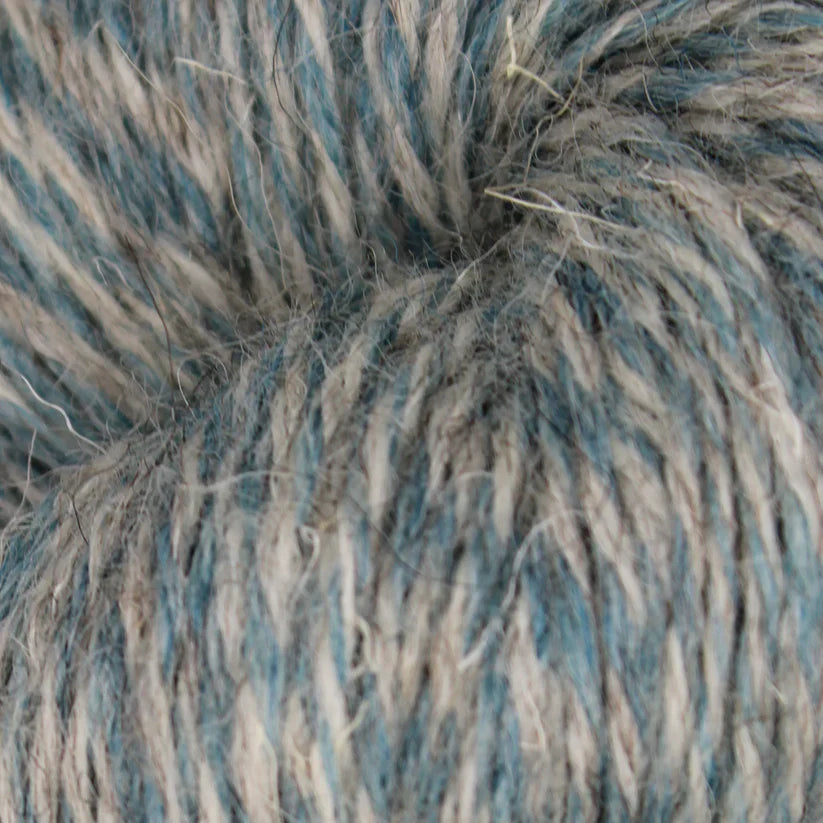
The British Breeds line is made up of two different color palettes: Pure British Breeds and Faded British Breeds.
Pure British Breeds is an undyed breed-specific British wool range. The fleece of each sheep breed has evolved to suit the environment the breed is native to, which gives its yarn unique characteristics.
Faded British Breeds is a subtle washed-out color range that blends fibers from a North of England Mule (a cross of a Blue-faced Leicester ram and a Northumberland Mule ewe) with less than 25% dyed British wool. The natural kemp in this fleece gives the yarn an authentic British wool look.
All Baa Ram Ewe wool yarn is mulesing-free.
Our notes
After making a few of our own projects with this yarn, here's what we've found:
Rustic texture: All of the yarns in this line have a more rustic texture and feel to them. People sensitive to the prickle factor might not want to use this for next-to-skin garments. Romney Marsh is the softest of the bunch.
Beautiful natural tones: The richness of wool's natural colors really comes through, especially with Jacob and Black Welsh Mountain.
Durable and strong: The longer staple length of these wools combined with the way it's spun give this yarn good durability. While the yarn isn't as elastic as some other wools, this may help when considering what yarn to use for high-wear pieces.
Low-process but clean: British Breeds has less vegetable matter (VM) in it and a reduced lanolin smell compared to other low-process yarns we've come across.
Consistent gauge across breeds: We didn't have any issues getting a consistent gauge across the different breeds. You could easily use different breed skeins for natural-toned colorwork and not have to adjust things.
Not splitty: The yarn itself is fairly smooth and doesn't split as easily as other natural wool yarns. We did have some mild untwisting issues with one skein of Hebridean during swatching, but didn't come across the same issue on the other skein.
Swatch details
All swatches were wet blocked before measuring.
Knit
- Colors: Faded Blue, Derbyshire Gritstone
- Swatcher: August
- Needles: 4mm (US 6)
- Stitch: Stockinette with a seed stitch border
- Gauge: 25 stitches and 36 rows per 4" / 10cm
Crochet
- Colors: Faded Blue, Derbyshire Gritstone
- Swatcher: Avery
- Hook: 3.75mm
- Stitch: Half double crochet
-
Gauge:
- Faded Blue: 22 stitches and 16 rows per 4" / 10cm
- Derbyshire Gritstone: 20 stitches and 16 rows per 4" / 10cm
Nalbind
- Colors: Faded Blue, Derbyshire Gritstone
- Swatcher: Stephanie
- Tension: Needle, 20mm circumference
- Stitch: Oslo F1
- Gauge: 36 stitches and 21 rows per 4" / 10cm
Weave
- Colors: Faded Blue, Derbyshire Gritstone
- Swatcher: Stephanie
-
Sett:
- Faded Blue: 10 ends per inch
- Derbyshire Gritstone: 8 ends per inch
-
Structure: Plain weave
- Faded Blue: 37 picks per inch
- Derbyshire Gritstone: 45 picks per inch
- Warp: Size 10 crochet cotton
Yarn details
| Fiber content | 100% breed-specific British wool |
| Construction | 4-ply Singles: Z-twist Plied: S-twist |
| Source | United Kingdom |
| Weight | Craft Yarn Council: 3: Light Ravelry: DK |
| Gauge (4" / 10cm square) | Knitting: 23 stitches Crochet: 23 single crochets |
| Tool size | Needle: US 6 / 4.0-4.25mm Hook: US G/6 / 4mm |
| Yardage/Meters | 223.0yd / 204.0m |
| Skein weight | 3.5oz / 100.0g |
| Grist |
1019.4yd/lb 2040.0m/kg |
| Care | Hand wash, lay flat to dry |
Please note: Certain colors may bleed, especially dark colors and vibrant ones. Always make a test swatch and block it, if you’re concerned about color bleeding. To help reduce bleeding, block with cold water, use color catching sheets in the water, only use one color, or stay away from high-contrast colorwork.
Share